
Local and B2B SEO
Most SEO advice was written for informational websites. If you sell to other businesses or serve customers in a specific area, that advice usually does not apply. Local buyers search with geographic intent. B2B buyers search by product spec, industry term, or supplier name. Getting either of these right starts with understanding how your actual customers search, not what the standard playbook says.
Why this is different
A hydraulics distributor, a facilities company, and a home remodeler don't share buyers, search behavior, or competition. Generic SEO treats them the same.
B2B buyers usually know exactly what they want. They search by product code, application, or industry term, and consumer keyword strategies miss them entirely. Local buyers search with intent and proximity. Ranking in maps and local results takes a different set of signals than standard organic.
I've worked in industrial distribution, facilities management, and home services. Knowing how those buyers search is what gets them to pick up the phone.
How I Work
I start with how the business gets found today. Most have more organic presence than they realize: it's just pointed at the wrong terms or the wrong locations.
Then I look at the gap between how the business describes itself and how customers search for it. Those are usually further apart than anyone expects.
Fixes go in order of impact. For local, that's usually the Google Business Profile and location pages first. For B2B, it's the core product or service pages and the industry terms they're not ranking for yet. You get the fixes that bring in calls first.
What Local And B2B SEO Includes
Grab a coffee and scroll through.
Google Business Profile
Setup, categories, photos, and posts built to win the map pack and "near me" searches. It's often the first thing a local buyer sees.
Location Or Service Pages
A page for every city and neighborhood you serve, written for how people in that area actually search. Multiple locations each get their own.
Citations And Directory Consistency
Your name, address, and phone number matched across every directory, so search engines and AI tools trust where you are.
Spec And Industry Keyword Research
Finding the part numbers, applications, and industry terms your buyers and procurement teams type, not just the generic ones.
Product And Service Page Optimization
Pages rewritten around those terms, with content built for long sales cycles and multiple decision makers.
Technical SEO And Audits
For sites that haven't been touched in years: speed, crawlability, and schema fixed first, then progress tracked against the terms that bring in business.
Results
Recruiting Services Business: Implemented local SEO for targeted industry verticals and sales areas on a limited budget. KPIs improved based on user intent, benchmarked in Google Analytics.
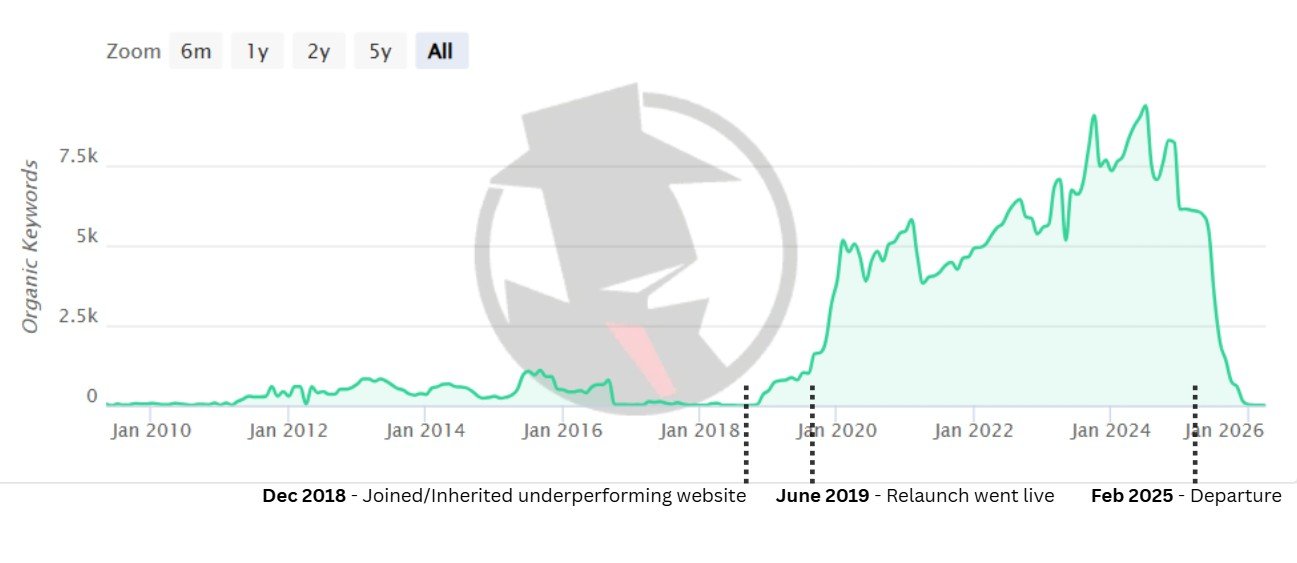
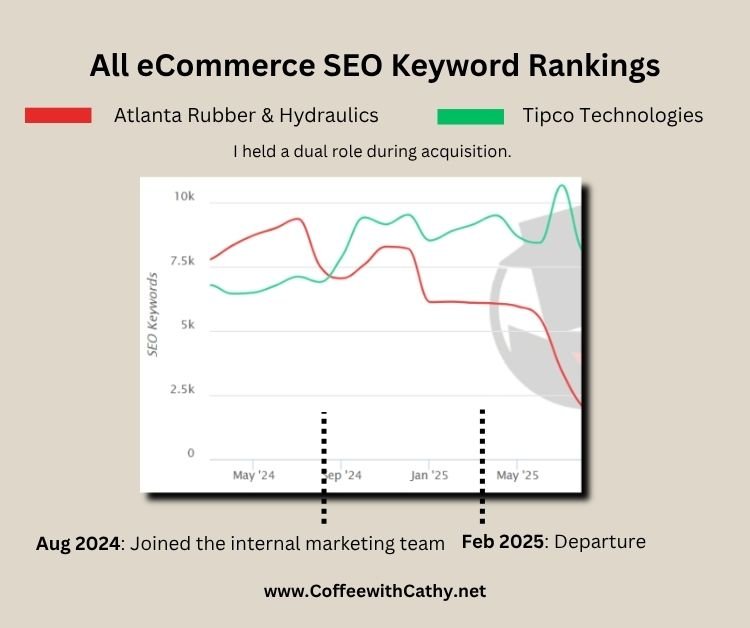
Industrial Distributer With Regional Locations: Ranked for the part numbers, specs, and application terms industrial buyers search. The site reached 8,000+ keywords.
What Weak Local and B2B SEO Is Costing You
Invisible Outside Your Company Name
People who already know you can find you. Everyone else finds a competitor.
Tap to see the fixThe Fix
Pages get built around what buyers search for, not just your name, so new customers can find you too.
Locations Or Service Areas Don't Show Up
You have multiple locations and only one appears in local search. The others might as well not exist online.
Tap to see the fixThe Fix
Each location gets its own optimized profile and page, so every area you serve shows up.
Directories And Chains Outranking You Locally
National directories take the top spots for searches in your own city, and the leads go through them first.
Tap to see the fixThe Fix
A strong Google Business Profile and consistent citations put you in the map pack, so buyers come straight to you.
Missing The Buyers Who Search By Spec
B2B buyers search by product code and application. If your pages don't use those terms, you're not in the running.
Tap to see the fixThe Fix
Pages use the part numbers, specs, and industry terms your buyers actually type, so you show up when they're ready to buy.
Traffic From The Wrong People
Visits from outside your service area or outside your industry. It fills the report and not the pipeline.
Tap to see the fixThe Fix
Keywords get narrowed to your area and your buyers, so the traffic that comes in can actually become business.
A Google Business Profile Nobody Manages
Old hours, missing photos, unanswered reviews. It's often the first thing a local buyer sees, and it's sending them somewhere else.
Tap to see the fixThe Fix
The profile gets completed, kept current, and reviews get answered, so it works like a storefront.
Right Fit / Not Right Fit
Works well for:
- Local service businesses with one or more locations
- B2B companies selling to businesses
- Industrial, distribution, facilities, trades, and home service businesses
- Companies competing locally or regionally
Not the right fit for:
- At this point, I don't want to work with Big Box Brands or Retailer Poweerhouses
- Businesses with no physical location or defined service area
Does any of this sound familiar?
- You rank for your company name and almost nothing else
- You have multiple locations but only one shows up in local search
- A directory or chain outranks you in your own city
- Your buyers search by spec or application and you're not in those results
- Customers say "referral" but you suspect they searched first
- Your site gets traffic but not the right people
Contact Cathy Gray
I work best where marketing, eCommerce, and operations overlap.
Whether you're hiring or need help with your business, I'd like to hear about it.
Area of Marketing Expertise
Featured Work
Related Posts on SEO
How Does Local SEO Work For A B2B eCommerce Site?
Local SEO for a B2B eCommerce site works by tying your online store to the places you actually serve customers: your branches, your warehouse, your service area. Most local SEO advice is written for restaurants and plumbers. Most B2B SEO advice is written for SaaS...
How Do Distributors Get Found Online By Buyers?
Distributors face a specific challenge: buyers are often searching for a product or brand they already know, not searching for "a distributor." Getting found means showing up at the exact moment a buyer is trying to source that product. Rank For The Products You...
Does SEO Work For Niche Industrial Products?
Yes, and often better than people expect. Niche industrial products actually have an advantage in SEO that broader consumer products don't: far less competition for the exact terms buyers are searching. Lower Search Volume Doesn't Mean Lower Value A niche industrial...
What’s The ROI Difference Between SEO And Paid Ads For eCommerce?
This question comes up constantly, and the honest answer is that SEO and paid ads aren't really competing for the same job. They pay off on different timelines, and comparing them head to head misses how they actually work together. Paid Ads: Fast, But Temporary PPC...
How Do I Improve Conversion Rate On My Industrial Online Store?
Conversion rate problems on industrial sites usually come down to friction: too many steps, missing information, or a site that doesn't answer the questions a buyer actually has. Fixing conversion rate is less about tricks and more about removing obstacles. Product...
What Should Show Up When Someone Googles Your Business Name?
Try this right now: open an incognito window and Google your own company name. What do you see? If it's your website, your social profiles, a review site or two, and maybe a local directory listing then you're in solid shape. If a competitor shows up anywhere on that...
AIO and GEO. It’s Still Just SEO.
Everyone's Talking About AIO and GEO. It's Still Just SEO. There's always something new in marketing. A new platform, a new acronym, a new reason to panic and wonder if everything you've been doing is suddenly wrong. Right now, that thing is AIO and GEO. AIO: AI...
Unlocking Revenue Potential: The Business Impact of SEO in Ecommerce
Most eCommerce businesses have products people are actively searching for. The problem is showing up when it counts. That's the short version of what SEO does. It's not a buzzword or a checkbox: it's how customers find you before they ever land on your site. And for...