
You Showed Up in Google. Then Your Website Lost the Sale.
A real example of how digital marketing channels work for ecommerce businesses.
I needed fill dirt delivered to my house in Woodstock. Not a complicated need. I knew I needed a tandem truck of fill dirt that was local to deliver to my house and was ready to order.
I did what most people do, I searched Google.
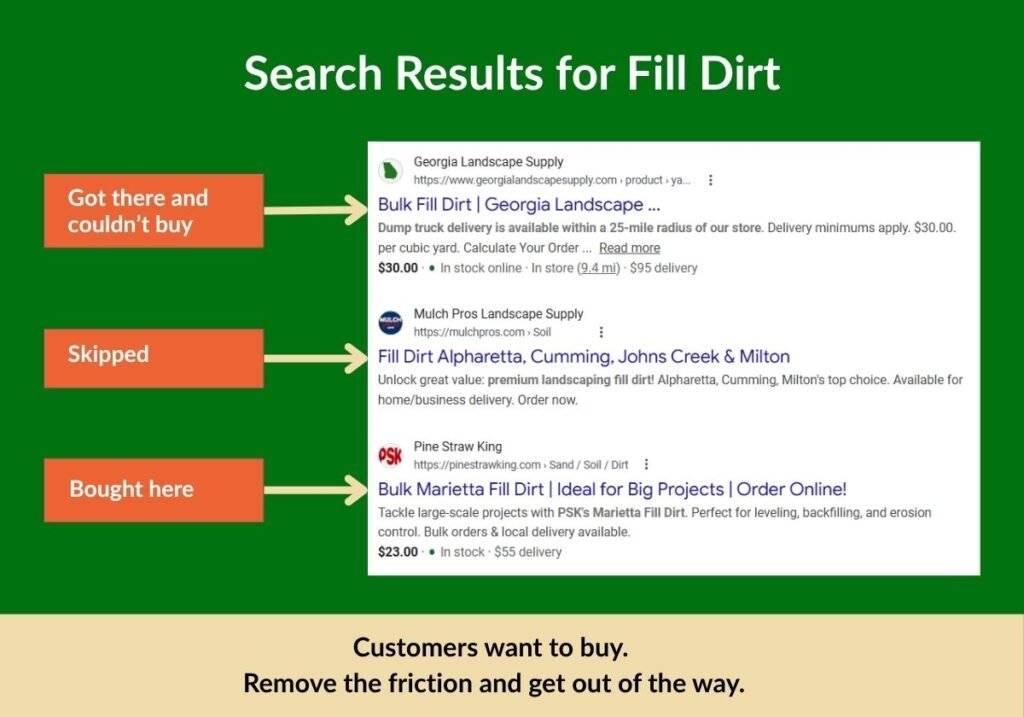
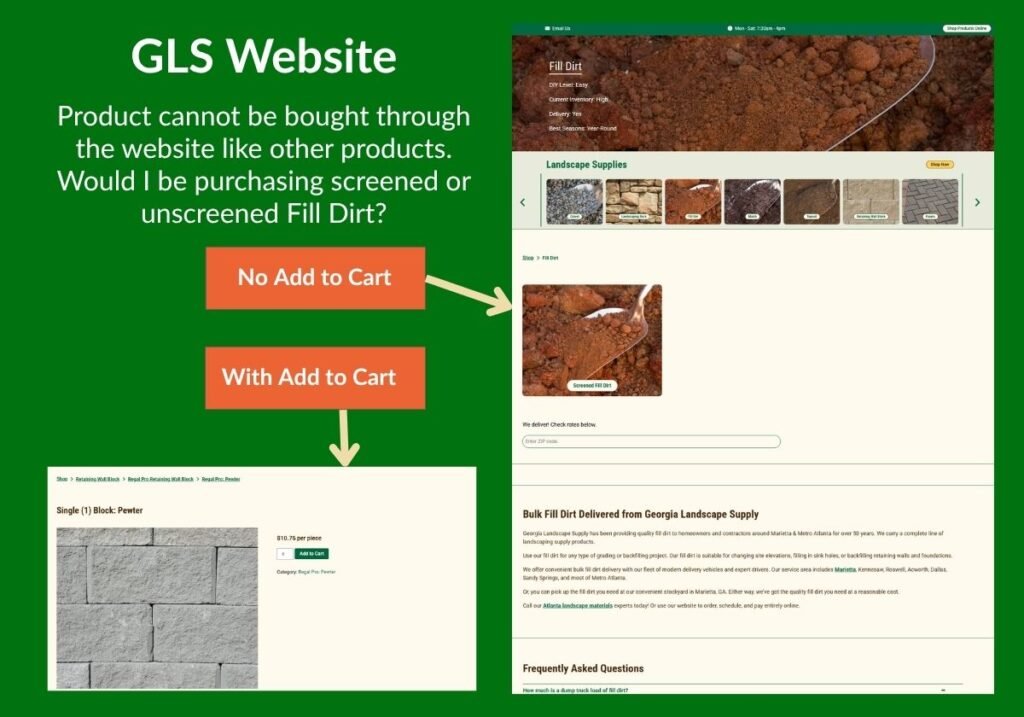
Two local businesses showed up. I clicked the first one: Georgia Landscape Supply. They had what I needed, the price was reasonable, and delivery was available. But when I clicked into the product page, something was off. The product, or product title, was named screend fill dirt, the description said it was unscreened. I wasn’t sure if I was looking at the right material. I read it twice, still confused, and decided I wasn’t going to gamble on a truckload of the wrong fill dirt showing up in my driveway.
I went back to Google and clicked the second result: Pinestraw King. Same product, clear description, delivery to Woodstock, order online. Done. PK got my order. GLS didn’t.
Both businesses did everything right to get found. Only one of them closed the sale.
Getting Found Is Only Half the Job
This is the part most business owners don’t realize when they’re thinking about marketing.
You put in the work. You’ve got a website, Google presence, social media. And it’s working, because people are finding you. But clicks aren’t sales. Every person who finds you online still has to land somewhere on your website. A product page or a service page and that page has to do its job. It’s got to close that sale, just like a salesperson does.
GLS got me to their website. That’s not nothing. Showing up when someone Googles what you sell is genuinely hard work, and they did it. But the product page couldn’t answer my question. The product page made me more confused, so I left.
That gap between getting found and getting the sale is where most ecommerce businesses lose sales they never even know they lost.
What PK Got Right
Getting found
PK shows up in local search results for landscaping supplies across Woodstock, Marietta, Kennesaw, and surrounding areas. Their site covers the products their customer search for, pine straw, mulch, topsoil, fill dirt, gravel, with clear product names that match. When I searched for fill dirt delivery in Woodstock, they were there.
That’s search engine optimization (SEO) doing its job: making sure the right people find you at the right moment.
The website
This is where PK separated itself from GLS.
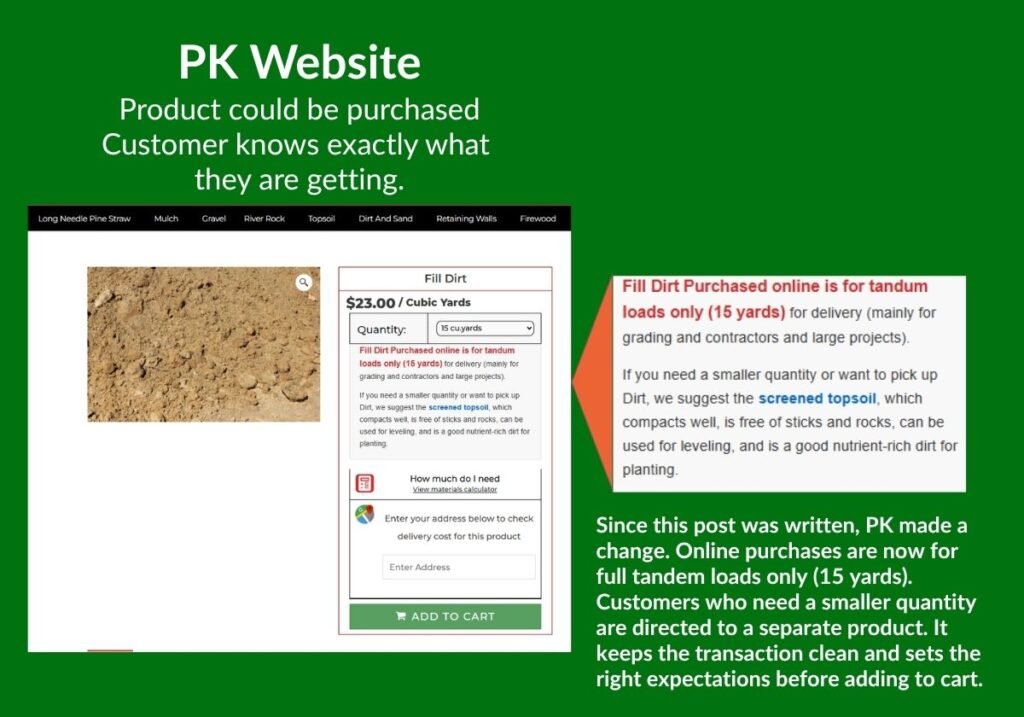
The product page told me exactly what I was getting. The title matched the description. I could enter my address and see the delivery cost and could see they delivered to my area. Turnaround was 1–3 business days. Every question I had was answered before I had to ask it.
A clear product page does more selling than any ad campaign.
Getting the order
The ordering process was simple. No confusion about what I was buying or delivery delivery costs. I turned from a visitor or potential buyer to a customer
Bringing customers back
Pine straw and mulch have their busy seasons, but landscaping needs come back every year. A business that captures customer emails and follows up with a spring reminder or a seasonal offer is building long-term revenue on top of a single transaction.
It costs far less to bring back a customer who already trusts you than to find a new one.
What GLS Got Wrong And What It Cost Them
GLS isn’t a bad business. They have over 200 products and have been in business for nearly 50 years of experience. Their SEO was strong enough to show up in #1 with my search.
But the product page lost me in under a minute.
The title and description didn’t match. I didn’t know if I was looking at the right product. In ecommerce, confusion leads to one thing: the customer leaves. I didn’t call to clarify. I didn’t send an email asking for help. I went back to Google and found someone else.
That’s not a marketing problem when GLS showed up. It’s a website problem. And no amount of ad spend, social posting, or email campaigns can fix a product page that sends customers away.
What This Means for Your Business
You don’t need to do everything at once. Most small ecommerce businesses don’t have a full marketing team, and that’s fine. But the order of operations matters.
Start here:
- Make sure your product pages are clear in title matches description so customers knows exactly what they’re getting
- Make sure your service or delivery area is easy to find
- Make sure the ordering process doesn’t make people think twice
Then build outward:
- Add local SEO so people in your area can find you
- Capture emails so you can bring customers back next season
- Consider a small paid ad budget once your site can actually convert the traffic you send it
The channel map works when all the pieces connect. It breaks down when the centerpiece – your website – has gaps that send customers somewhere else.
PK didn’t just get found. They earned the sale by making it easy to say yes.
Not sure where your marketing is breaking down, or where to start? That’s exactly what I do. I help small and mid-size businesses figure out what’s working, what isn’t, and what to fix first and without wasting budget on the wrong things. Let’s talk.